LearnOpenGL, My Way
My personal learning process working through the LearnOpenGL book.
This project is my personal learning process while working through the LearnOpenGL book, written in C++ with OpenGL and Dear ImGui.
Structure
Each concept from the book (depth testing, stencil testing, blending, instancing, shadow mapping, normal/parallax mapping, HDR, bloom, deferred shading, SSAO, PBR, IBL, etc.) is implemented as its own scene in src/Scenes, registered and switched between through the SceneManager.
Shared building blocks used across scenes (shaders, textures, framebuffers, materials, meshes/models, cubemaps, UBOs, etc.) live under src/OpenGL and src/Models.
Scenes
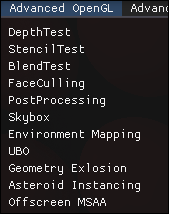
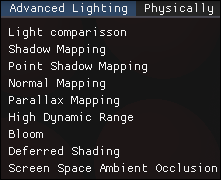
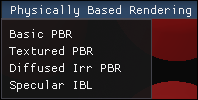
The scenes are grouped and selected at runtime through the UI, following the book’s own chapter groupings:
Some examples
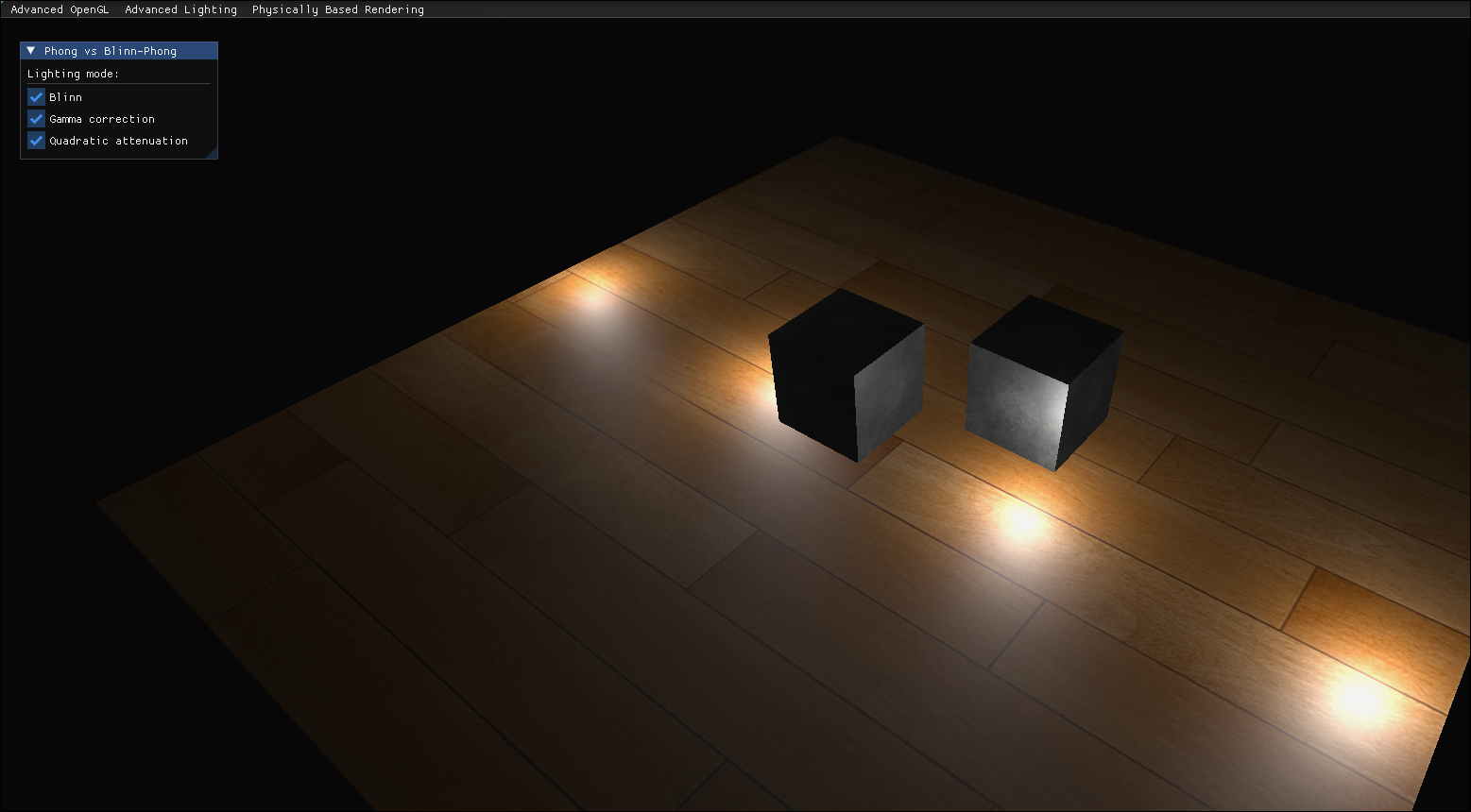
Phong vs. Blinn-Phong shading:
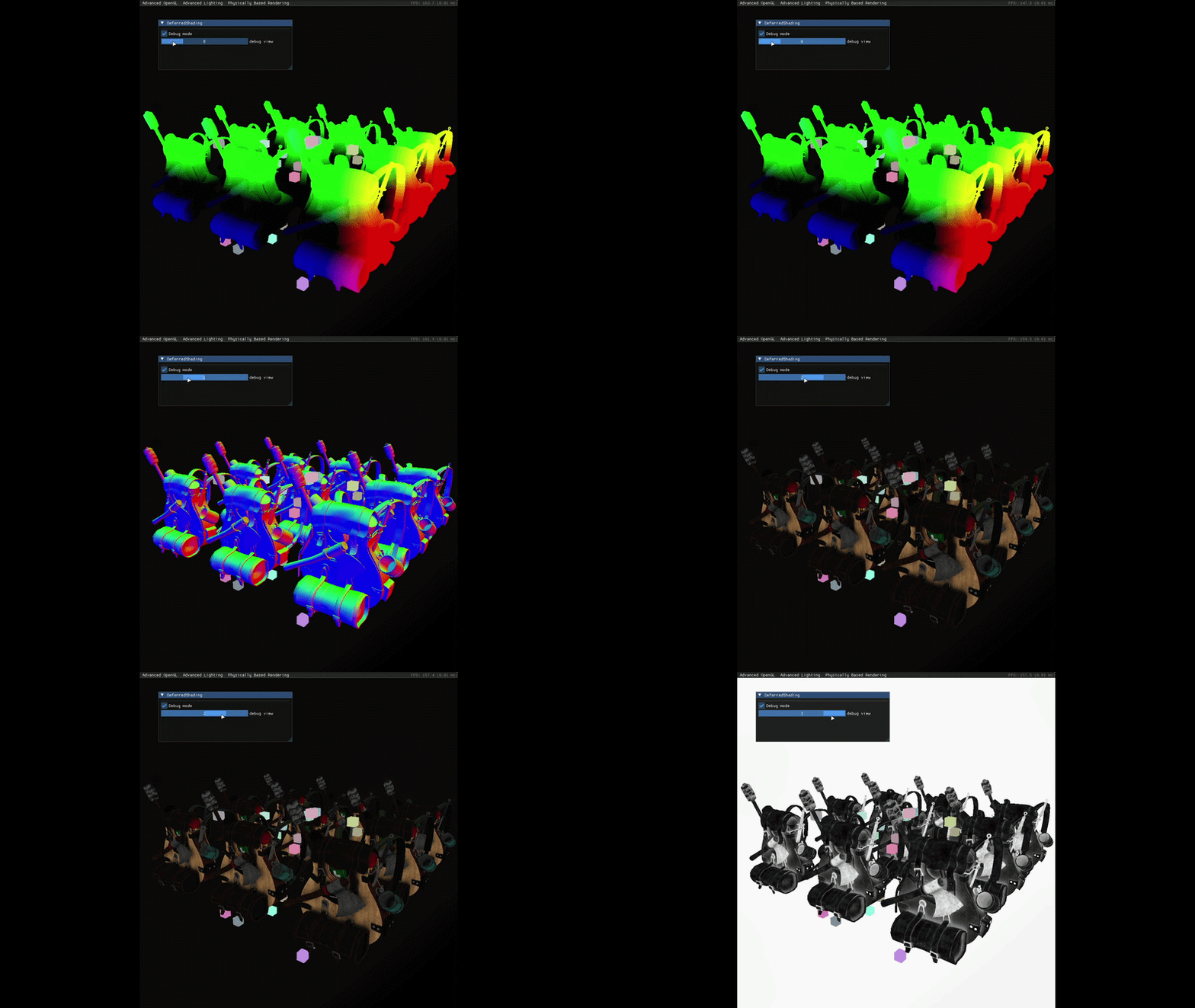
Deferred rendering (debug mode):
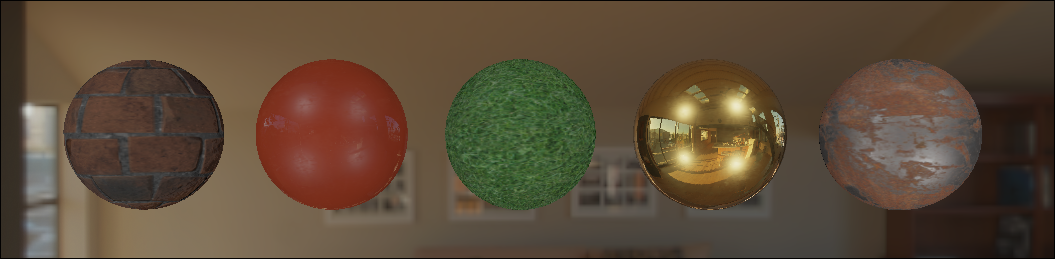
Physically Based Rendering (PBR):
A note on the helper classes
These helper classes are intentionally specific to what each scene needed at the time, not generic engine-style abstractions (still learning!). As later chapters required different or more advanced usage (for example a Texture2D for a framebuffer attachment, or a Framebuffer/Material built from a full specification struct instead of a simple set of parameters), I added a second constructor rather than reworking the original one and risking breaking every scene that already depended on it. So you’ll find classes like Texture2D, Material, and Framebuffer with more than one way to initialize them.
This isn’t the optimal design and it’s not meant to be. It’s left as-is on purpose so the progression is visible: the newer overloads are a decent hint at how the class would look if it were refactored properly, without having to go back and rewrite the earlier scenes that still rely on the original, simpler form.
Others
Developed and tested on CachyOS (Arch-based). Built and launched using the ./run.sh script.
No AI was used to write any of the project’s code.